How to Actually Have a Work-Life
Balance When You Work From Home
Struggling with work-life balance working from home? Proven boundaries, shutdown rituals, and daily habits that protect your personal time in 2026.
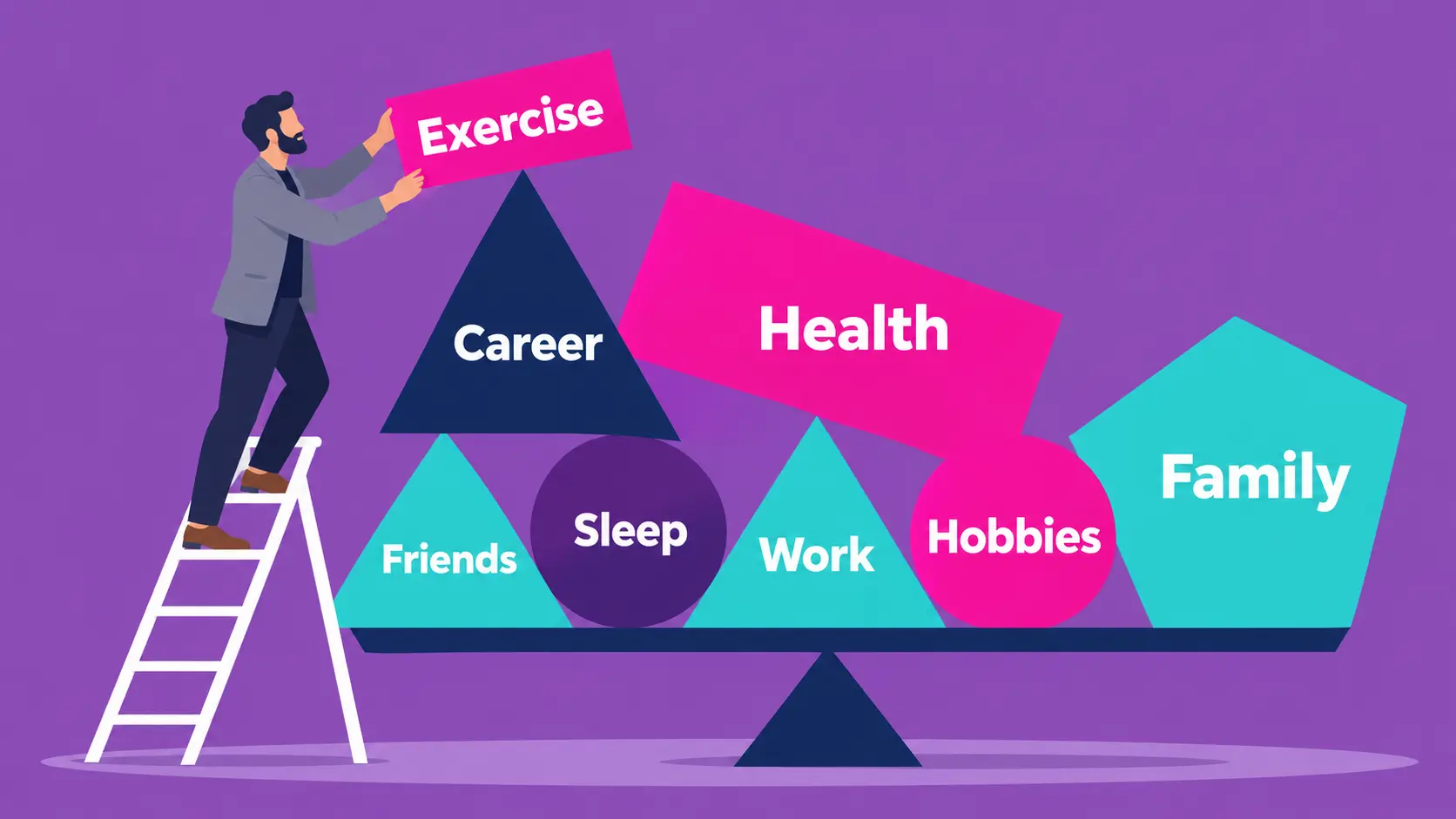
- An office used to mark the boundary between work and rest for you automatically — a commute, a building that closed. At home, that boundary has to be built on purpose or it stops existing.
- Fully remote employees report meaningfully higher burnout than on-site workers, driven by the same three things every time: isolation, trouble disconnecting, and boundaries that were never actually set.
- Five boundaries do most of the work: a fixed stop time, scheduled notification quiet hours, physical separation of your workspace, stated communication windows, and one real day off a week.
- A consistent shutdown ritual is probably the single most useful habit here — it stands in for what leaving a physical office used to do.
- Boundaries work better as settings than as willpower — a scheduled Do Not Disturb doesn't erode the way a daily decision does when you're tired or stressed.
- The strongest protection against looking "uncommitted" isn't being always available — it's stating your hours clearly and letting consistent, on-time output do the talking.
How to Actually Have a Work-Life Balance When You Work From Home
Remote work sells itself on flexibility and balance. For a lot of people, the reality looks a little different — a workday that never quite has an edge to it, evenings interrupted by "just one more email," weekends pulled back toward whatever didn't get finished during the week.
None of this is really your fault, and it's not a discipline problem either. A commute and an office building used to do a lot of quiet work for you — marking, physically and automatically, where work ended and the rest of your life began. Take that away, and unless you rebuild it on purpose, the line between the two just stops existing. Good habits here tend to stack on top of each other, so if you haven't already, it's worth reading through a broader list of good remote work habits alongside this guide.
Why This Is Genuinely Harder at Home Than It Looks
In an office, your environment enforces the boundary for you without you having to think about it. You travel to get there — that's a transition into work mode. You travel to leave — that's a transition back out. The building closes. You go home. None of that requires willpower; it's just how the space works.
Remote work quietly removes every one of those mechanisms at once. There's no commute to mark the shift. There's no closing time built into the building, because the building is your house. Your desk sits in the same space where you eat, relax, and sleep. And the same phone or laptop that holds your work Slack also holds your actual life.
Without that physical separation, the shift from "working" to "not working" often just... doesn't fully happen. People tend to start earlier and finish later than they did in an office — not because they decided to work more, but because nothing was there anymore to tell them to stop. This gets even harder when you're sharing your home with family during the day — if that's your situation, it's worth a dedicated look at how to work from home with kids, since the boundaries that matter most shift a bit when you're not working alone.
The fix isn't trying harder to stop working at a reasonable hour. It's rebuilding the structure that used to make stopping automatic.
The "Always On" Problem
A lot of remote workers check email after hours, work at least some weekends, and answer messages during time off — usually without ever consciously deciding to. It's just what happens when the channels that carry work never close.
Here's the pattern that causes most of it: a message lands at 7pm. It takes two minutes to read. Answering feels responsible, so you do — except the reply takes ten minutes, sparks a follow-up question, and now 45 minutes of your evening belongs to work, and your brain never actually powered down before bed. Multiply that across a year of workdays and it adds up to a genuinely large chunk of personal time, and a nervous system that rarely gets to fully rest.
Five Boundaries Worth Actually Setting
None of these are about working less. They're about keeping work inside defined edges so that rest, when it happens, is actually rest.
1A Fixed Stop Time, Backed by an Action
Pick a specific time and treat it as close to non-negotiable as your role allows. Put it on your calendar where colleagues can see it. Pair it with a shutdown ritual (more on that below) so it's an action, not just a hope.
2Notifications That Go Quiet on a Schedule
Set Slack, email, and Teams to auto-mute outside your working hours. Both iOS and Android let you schedule this once and forget about it — which matters, because a boundary that requires daily willpower tends to erode the first time you're tired or stressed.
3Physical Separation Between Work and Rest
Even in a small space, the spot where you work should look and feel different from the spot where you unwind — closing a door, folding away a desk, even just draping something over the monitor. Small as it sounds, this kind of cue genuinely helps your brain register that work is over.
4Communication Windows You State Out Loud
Instead of being reachable at all hours, decide when you're generally checking and responding to non-urgent messages, and say so — something like "I'm usually responsive 9 to 12 and 2 to 5." That one sentence does a lot of the work of managing other people's expectations for you. If your employer doesn't yet have a clear policy around this, a written WFH request form is a good place to formally set those expectations from day one.
5At Least One Real Day a Week With No Work at All
Recovery isn't laziness — it's the thing that actually makes sustained performance possible. If you can't point to a day in the last couple of weeks where you genuinely didn't think about work, that's worth taking seriously.
The Shutdown Ritual — Probably the Single Most Useful Habit Here
A shutdown ritual is just a short, consistent sequence you run at the same time every workday to deliberately close it out. It's standing in for what leaving a physical office used to do — telling your brain, in a way it actually registers, that the workday is over. Here's a version that works well, and takes about ten minutes total:
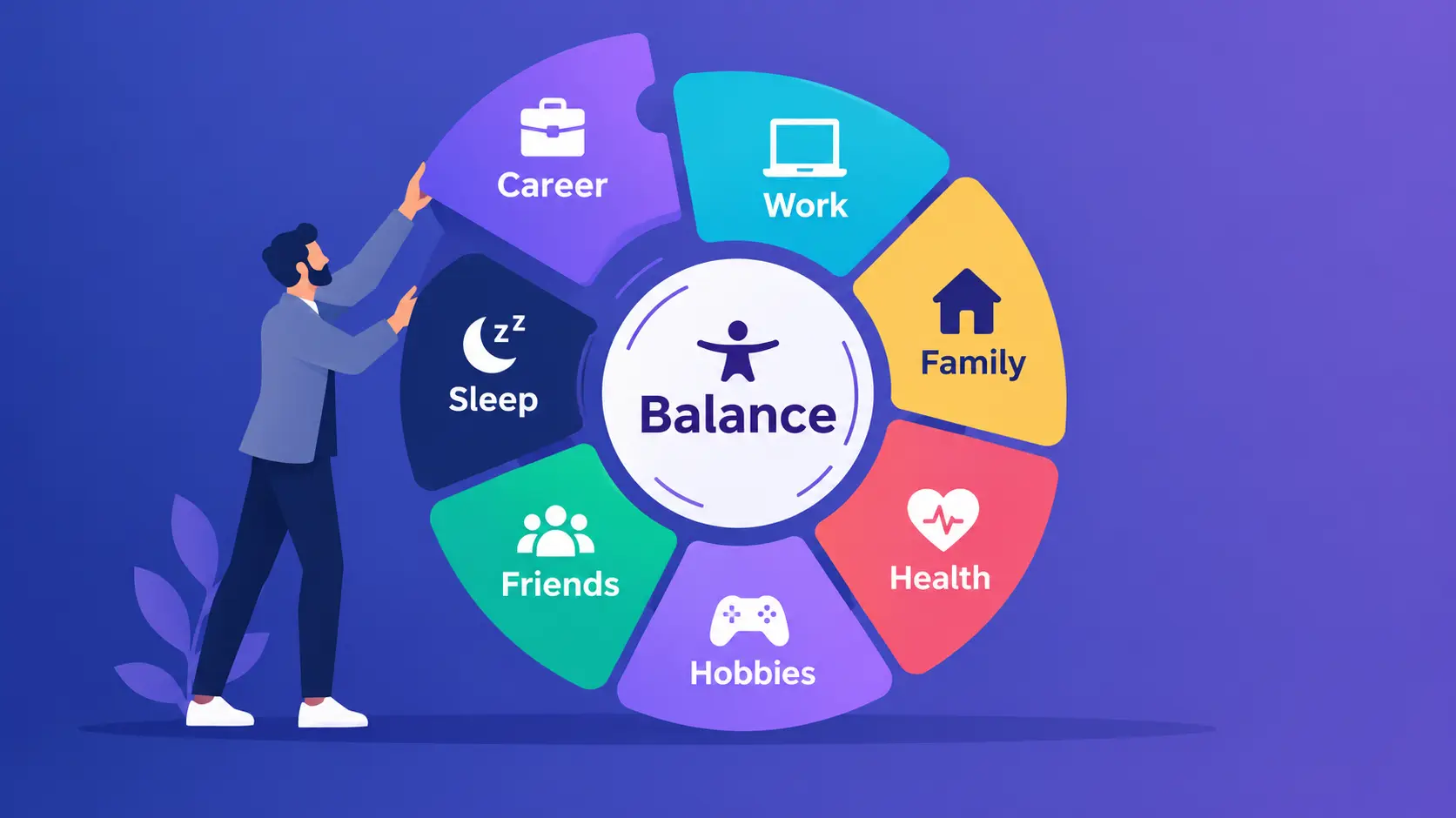
Your Physical Space Is a Boundary Tool Too
Most home offices happen by accident, not by design — and the space itself either helps you disconnect or quietly works against you.
Even if your "office" is just a corner of a bedroom, treat it as a specific, defined spot used only for work. Leaving that spot at the end of the day becomes a physical version of leaving work.
Where possible, keep your work device in that space rather than carrying it to the couch or the bedroom. If work literally can't follow you into your evening because it's sitting in another room, you don't have to rely on willpower to ignore it. And it's worth revisiting your notification settings every so often — apps update, defaults reset, and a boundary you set up carefully three months ago might quietly be gone now.
Setting Boundaries Without It Looking Like You're Checked Out
The fear a lot of people have here is real: if I stop being instantly available, will people assume I'm not committed? The honest answer is that it depends far more on how you communicate the boundary than on whether you set one at all.
Say it before it becomes a problem. Tell your team your general hours before someone messages you at 8pm and doesn't hear back until the next day — something simple like "I'm generally around 9 to 5:30 and check messages in the morning and early afternoon" removes the guesswork entirely.
Keep your status consistent. Use "Do Not Disturb" outside your hours, every time, not just occasionally — consistency is what actually trains people's expectations.
Answer after-hours messages the next morning instead of right away. Replying at 9am the next day, with the same quality of response, sends a clear signal that your hours are reliable and that after-hours messages get acknowledged — just not instantly. This one shift alone stops the slow creep where "available sometimes at night" quietly becomes "expected to be available at night."
Protecting Weekends and Actual Time Off
Weekend and vacation work usually isn't happening because of real emergencies — it's happening because the channels work flows through never physically close.
For weekends, the same notification and shutdown principles apply. It helps to notice the difference between "I might be missing something" — which is just anxiety, and will always be there no matter what — and "something today genuinely needs me," which is actual urgency and is rare.
For real time off, a genuine break — not two hours of morning email followed by a day of guilt — is what actually resets focus and energy. Set an out-of-office with your return date and an emergency contact, and then actually stay off email. The team managed before you were there; they can manage for a week.
A Quick Way to Check Where You Actually Stand
It's easy to feel like your balance is off without being able to point to exactly why. A few honest questions, run every few months, tend to make the problem specific instead of vague:
Each answer points pretty directly at a fix — late stop times mean the shutdown ritual needs work, weekend slippage means notification settings need tightening, one specific app pulling you in means that's the one to restrict first, and a consistently low Monday-morning number means recovery time simply isn't enough yet.
Mistakes Worth Watching For
- Treating "always available" as proof of commitment. It isn't — it's usually just a fast track to burnout. What actually gets noticed is good work delivered on time, not how quickly you answer a 9pm Slack message.
- Never actually telling anyone your hours. A boundary that only exists in your head isn't a boundary — it's just a private hope that nobody happens to test. Say it out loud, put it in your calendar, reflect it in your status.
- Relying on willpower instead of settings. Deciding every single evening to "stop checking email after 6" is a decision you have to keep making, and it breaks down exactly when you're tired or stressed — which is when you need it most. Turning off notifications after 6 is a setting you configure once.
- Working through lunch to get ahead. It usually backfires — a real break away from the screen tends to leave you sharper for the afternoon than skipping it does.
- Confusing "not working" with actually resting. Sitting on the couch with work Slack open on your phone isn't rest, it's just work with worse posture. Real recovery means your head is actually somewhere else.
Frequently Asked Questions
Build It on Purpose
Work-life balance while working from home doesn't happen automatically, but it's genuinely achievable — the people who have it built the boundaries deliberately instead of hoping they'd show up on their own.
Start with the shutdown ritual this week. At your normal stop time, close everything, mute everything, and do one physical thing that marks the day as over. You'll likely notice it the next morning, simply because you actually rested the night before.
From there: lock in your notification settings, say your hours out loud to your team, and run the quick check-in above every few months to catch whatever's slipping. None of this is complicated. It's just doing on purpose what an office used to do without asking.
Add a Comment