The Digital Nomad Lifestyle:
The Complete 2026 Guide
- The digital nomad lifestyle means earning a living remotely while traveling or living in different locations instead of working from one fixed office.
- More than 60 countries now offer a dedicated digital nomad visa as of 2026, up sharply from just a handful five years ago.
- Realistic monthly costs range from about $1,200 in lower-cost countries to $3,500+ in expensive cities — plus a financial buffer for the unpredictability of being on the road.
- A reliable internet backup plan matters more than travel photos — connectivity failures are the top reason new nomads lose client trust.
- Not every nomad moves constantly — "slow travel," staying in one place for months at a time, is a common and often cheaper alternative to city-hopping.
- Getting started follows a specific order: income first, then a financial buffer, then logistics at home — not destination research first.
- Burnout, financial strain, and isolation are the top reasons people quit — and all three are addressable with a slower pace and real planning.
What Changes When Your Office Starts Moving
You've already made your home office work — a dedicated desk, a second monitor, a setup that keeps you productive on video calls. What most guides skip is the part that matters most to someone in your position: what actually changes when that office starts moving, and what the real, in-order steps look like to get there. As of 2026, more than 60 countries now offer a dedicated visa for remote workers who want to live and work from abroad. This guide covers both halves in one place — what the digital nomad lifestyle actually involves, and exactly how to start living it.
In our experience helping remote workers plan their setups, the biggest misconception is that the digital nomad lifestyle means working less. In practice, it usually means working the same hours — just with more logistics around where those hours happen.
Why It Matters in 2026
Remote work has become permanent for millions of workers, and governments have responded by creating legal pathways for them to live abroad. According to Buffer's State of Remote Work report, a majority of remote employees now say location flexibility is a top factor in job satisfaction — and employers increasingly compete on that flexibility to retain talent.
Remote workers often tell us that what pulled them toward the lifestyle wasn't travel itself — it was realizing their job no longer required them to live near an office at all. That realization, multiplied across millions of workers, is why visa programs, co-working spaces, and nomad-focused services have grown so quickly since 2023.
How It Actually Works Day to Day
Day to day, the digital nomad lifestyle works much like remote work from home: fixed hours, client calls, and deadlines — but the workspace changes location every few weeks or months. Most nomads pick a "base" in each destination — an apartment, co-living space, or co-working hub — rather than moving daily.
A typical week means working from a space with a tested internet connection, keeping the same core hours as clients or teammates back home, and using time zone overlap to schedule calls. The unglamorous truth: successful nomads spend real time researching internet reliability, time zones, and workspace logistics before they ever book a flight — the same planning instinct that already went into building a good home office.
The Four Types of Digital Nomads
Not all digital nomads follow the same pace of travel — the label covers everyone from people who change cities every few weeks to those who relocate once and stay put for years. What they share isn't a travel schedule; it's that their income isn't tied to a physical location.
Travel between multiple cities or countries a year, typically staying a month or two in each. Highest logistics overhead, highest novelty.
Relocate abroad full-time without constant moving, but remain untethered from their home country. Lowest logistics overhead of the four types.
Stay based in one place most of the year, then work from a different location during specific months — often chasing weather, cost, or family time.
Work from wherever they're parked, often within one country or region. Trades apartment logistics for vehicle logistics and connectivity planning.
Recognizing which type fits your working style — before choosing a pace of travel — is one of the most useful planning steps new nomads skip.
What Jobs Support This Lifestyle
Jobs that support the digital nomad lifestyle are those that require only a laptop, internet connection, and asynchronous or flexible communication:
- Freelancing: writing, graphic design, marketing, and consulting
- Remote employment: software development, customer support, project management, and other roles at distributed companies
- Online business: e-commerce, coaching, and content creation
- Virtual assistance and online teaching, which often allow flexible, asynchronous hours
Jobs that require in-person presence, fixed local hours in a specific time zone, or heavy real-time collaboration tend to be the hardest to sustain while nomadic. Work measured by deliverables rather than strict clock-in hours accommodates the unpredictability of travel far better than shift-based or meeting-heavy roles.
What It Actually Costs in 2026
The digital nomad lifestyle typically costs between $1,200 and $3,500+ per month depending on destination, housing choice, and visa requirements. Lower-cost regions in Southeast Asia and Latin America sit toward the bottom of that range, while Western Europe and major cities sit toward the top. To see how your own income stacks up against those numbers, run it through our salary calculator before you set a budget.
Which Countries Offer Digital Nomad Visas in 2026
More than 60 countries offer a dedicated digital nomad visa, including Portugal, Spain, Croatia, Costa Rica, Japan, and Indonesia. Most programs require proof of stable remote income, valid health insurance, and a minimum monthly income threshold, which varies by country. The number of countries offering these visas has grown steadily every year since 2020, reflecting how normalized remote work has become for national immigration policy.
Gear and Tools Digital Nomads Need to Stay Connected
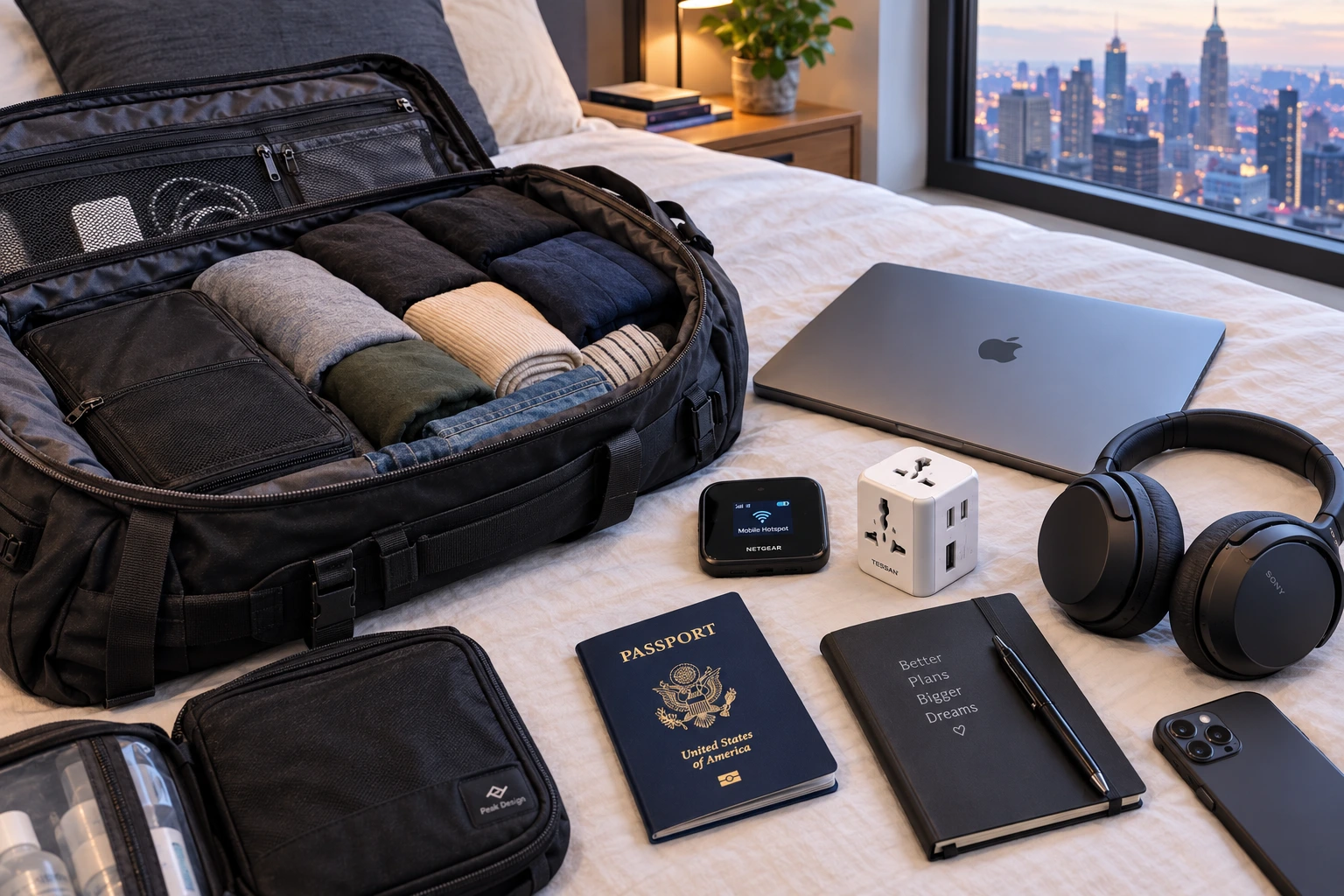
Digital nomads need a reliable primary internet connection, a backup connectivity option, a lightweight laptop, and basic ergonomic accessories to work productively away from a fixed office. The gear that matters most isn't glamorous — it's redundancy.
- Portable wifi hotspot as backup when local internet drops — see our roundup of the best mobile hotspots for remote workers in 2026
- Lightweight, durable laptop built for travel, not just desk use
- VPN for secure access to work systems on public networks
- Compact ergonomic accessories — a portable stand or travel mouse — to avoid the neck and wrist strain a poor setup causes
- Noise-cancelling headphones for calls in shared co-working spaces
- Universal power adapter that works across every region you plan to visit
- Cloud-based file storage and project management tools, so work isn't tied to a single device if something gets lost, stolen, or damaged
If you've already built a solid home office setup, most of this gear philosophy will already feel familiar — you're just making it portable.
Is the Lifestyle Right for You?
The digital nomad lifestyle fits people with stable remote income, flexible work hours, and comfort managing logistics like visas and travel insurance on their own. It's a harder fit for anyone whose job requires fixed local hours, in-person presence, or highly stable, low-latency internet for real-time work.
Is Slow Travel a Better Fit Than Constant Moving?
Slow travel — staying in one location for three, six, or twelve months rather than moving every few weeks — captures much of the location independence of the digital nomad lifestyle while avoiding most of the logistical churn. It's a common and often overlooked middle ground.
Common Myths About the Lifestyle
How to Start Living the Digital Nomad Lifestyle: A Step-by-Step Plan
Wanting to become a digital nomad is the easy part — the gap between "this sounds appealing" and "I'm actually doing this" is where most people stall out. That gap is almost always logistics, not motivation. The ten steps below are the order experienced remote workers actually follow, without skipping the groundwork that makes the lifestyle sustainable past the first few exciting weeks.
Before anything else, get honest clarity on whether your current income source supports location-independent work, or whether you need to build one that does. This single question determines every decision that follows.
- Does your current job explicitly allow remote work from other countries, or only domestically?
- If you freelance or run a business, does it quietly require physical presence you haven't accounted for?
- Is your income stable enough to absorb the upfront cost of relocating, or do you need a buffer first? Our salary calculator can help you work out what you actually take home.
Save more than you'd typically keep while living in one stable place. Relocating introduces costs that simply don't exist when you stay put — short-term housing deposits, replacing items you couldn't bring, and everyday unpredictability.
A practical approach: estimate your monthly costs at your first destination, then set aside enough beyond that to cover several months, held separately from your regular income.
Five practical decisions most people need to make before departure. Skipping any of them tends to create stress later, usually at the worst possible moment.
- Housing: end your lease, sublet, or arrange storage
- Mail: set up forwarding or a scanning service
- Banking: confirm cards work internationally, or open a travel-friendly account
- Healthcare: research international or travel insurance
- Subscriptions and bills: audit what you're still paying for
Your first destination should be optimized for ease, not adventure — save the remote, less-documented locations for after you have real experience. Look for four qualities:
- An established remote-work or expat community for social connection and local knowledge
- Reliable, well-documented internet infrastructure
- A manageable visa situation, ideally a dedicated digital nomad visa or a generous tourist visa
- A moderate cost of living that leaves room for mistakes
Before you go, make sure your equipment and tools are genuinely portable and reliable — not just "good enough" for a fixed desk at home: a lightweight laptop, cloud-based files and tools, backup connectivity, a universal power adapter, and a VPN. If you've already followed a solid home office setup checklist, most of this will feel familiar — the goal is simply making that same reliability portable.
Spend real research time, not a five-minute search. This is the step most commonly skipped by excited first-timers — and the one most likely to cause serious problems if ignored.
- Check whether the country offers a digital nomad visa, and confirm its specific requirements
- If relying on a tourist visa, understand exactly how long you can legally stay
- Research tax residency rules directly for your situation — commonly triggered around 183 days in-country — with a qualified accountant
An ambitious first itinerary is tempting, but a slower, looser start works better in practice for almost everyone.
- Stay in your first location longer than you initially think you need
- Build in buffer days with no fixed plans, since logistics always take longer than expected
- Avoid back-to-back moves in your first month
One of the most underrated keys to sustaining this lifestyle is having routines that don't depend on a specific physical location, since your location will keep changing.
- A consistent work schedule — even as locations shift
- A simple morning or evening routine that doesn't require specific equipment
- A repeatable method for finding workspaces quickly
Isolation is one of the most common challenges of this lifestyle, especially in the first few months. Actively seeking out other remote workers — through co-working spaces, local meetups, or destination-specific online communities — significantly eases the adjustment. A few regular contacts per location is often enough to meaningfully reduce isolation.
This lifestyle isn't a one-time decision — it's worth periodically checking whether it's still serving you well.
- Is your current pace of movement still sustainable, or does it need to slow down?
- Is your financial situation still stable, or does your approach need adjusting?
- Are you maintaining the routines and connections that make this sustainable, or have they slipped?
Treating this as a flexible, adjustable lifestyle — rather than a fixed, permanent commitment — makes it significantly easier to sustain, and easier to step away from gracefully if your circumstances or preferences change.
Pro Tips from Experts
- Sequence matters. Income and buffer come before destination research — reversing the order is the fastest way to add financial stress to an already big transition.
- Start with a trial trip. Book four weeks in one location before committing to a longer nomadic stretch — it's long enough to reveal real problems, short enough to limit risk.
- Always have a backup connection. A portable hotspot with a local data plan has saved more client calls than any amount of travel planning.
- Keep core hours consistent. Anchoring your workday to a fixed time zone window, even as locations change, keeps teams and clients confident in your availability.
- Research visa and tax rules before booking flights, not after. Rules vary by country and change often — treat this as due diligence, not paperwork you can skip.
- Protect your routines harder than your itinerary. A consistent work schedule and a repeatable way to find workspaces matter more to long-term sustainability than any single destination choice.
Common Mistakes to Avoid
Most people who quit the digital nomad lifestyle early cite burnout from constant logistics, financial strain from underestimating costs, or isolation from not building local connections — and each traces back to one of these avoidable mistakes.
The Connectivity Dry Run — Then a Date on the Calendar
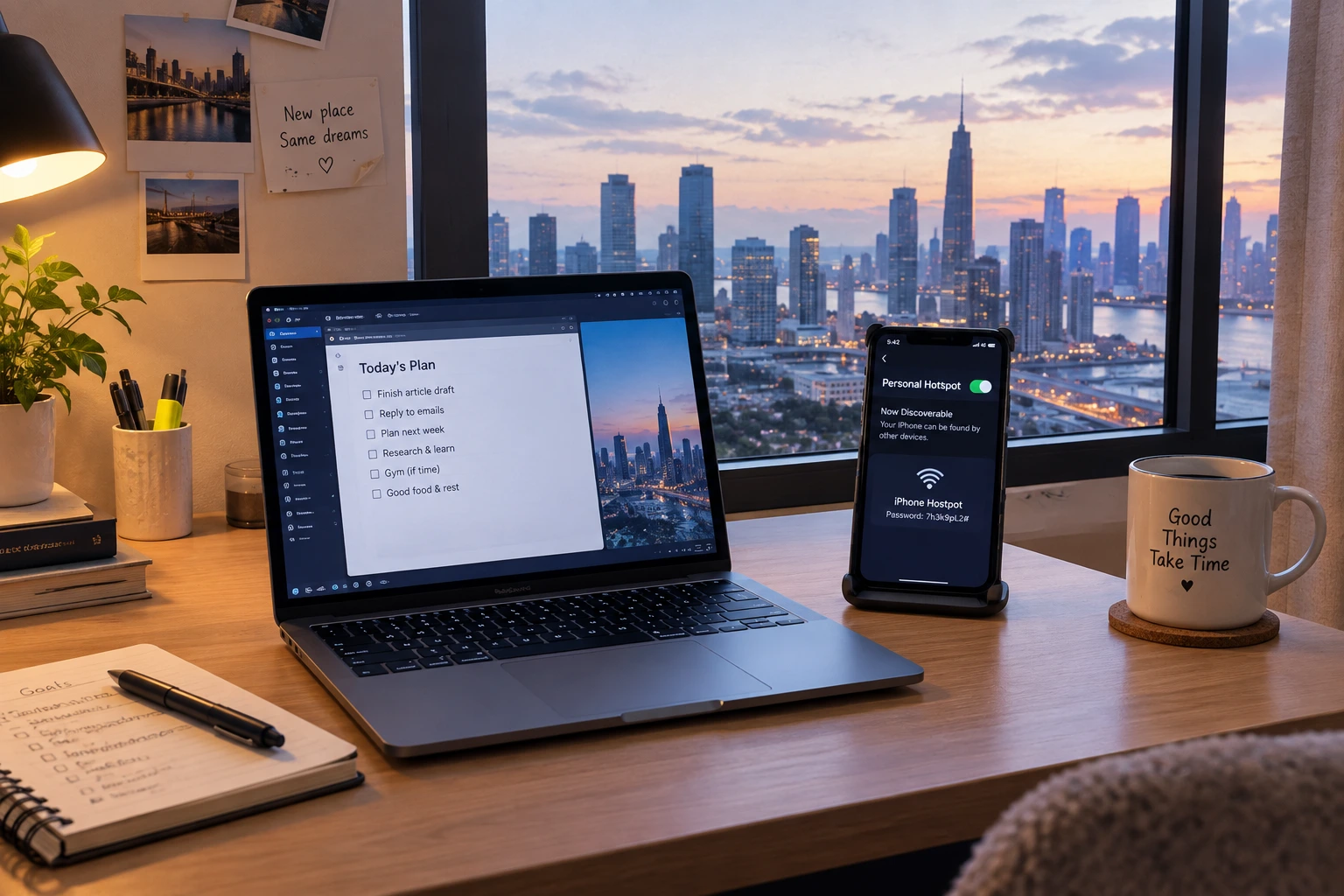
Here's a step most guides never mention: before you book anything, run a connectivity dry run from your current home office. Switch your home wifi off for one full workday and rely only on your phone's hotspot. If your workflow survives that test, your setup can likely handle a nomadic connection too.
Treating pre-departure logistics as a dated task, the same way you'd treat a work deadline, is the single biggest predictor of whether people actually leave on schedule instead of drifting the plan for another year.
A Pre-Departure Checklist
A condensed version of the plan above, to work through gradually rather than in one rushed weekend:
- Confirmed a remote-friendly income source
- Built a financial buffer beyond regular monthly expenses
- Sorted housing — ended lease, arranged storage, or sublet
- Set up mail forwarding or scanning
- Confirmed banking and cards work internationally
- Researched and purchased appropriate health insurance
- Audited and canceled unnecessary subscriptions
- Chosen a manageable first destination
- Researched visa requirements and length-of-stay rules
- Checked tax residency rules for the destination
- Backed up files to cloud storage
- Packed backup connectivity — local SIM or portable wifi
- Packed universal power adapters
Frequently Asked Questions
A Sequence, Not a Leap
The digital nomad lifestyle isn't a different job — it's the same remote work you already do, with more moving parts around connectivity, time zones, and legal logistics. Getting started is a sequence: secure income that travels, build a real financial buffer, close out logistics at home, and choose a manageable first destination before you book anything exciting.
Start small, test your connectivity before you test a new country, and build the transition around the systems that already work for you.
Add a Comment